Postpartum Hair Fall: Why It Happens and How to Feel Better About It
Jump to a Section
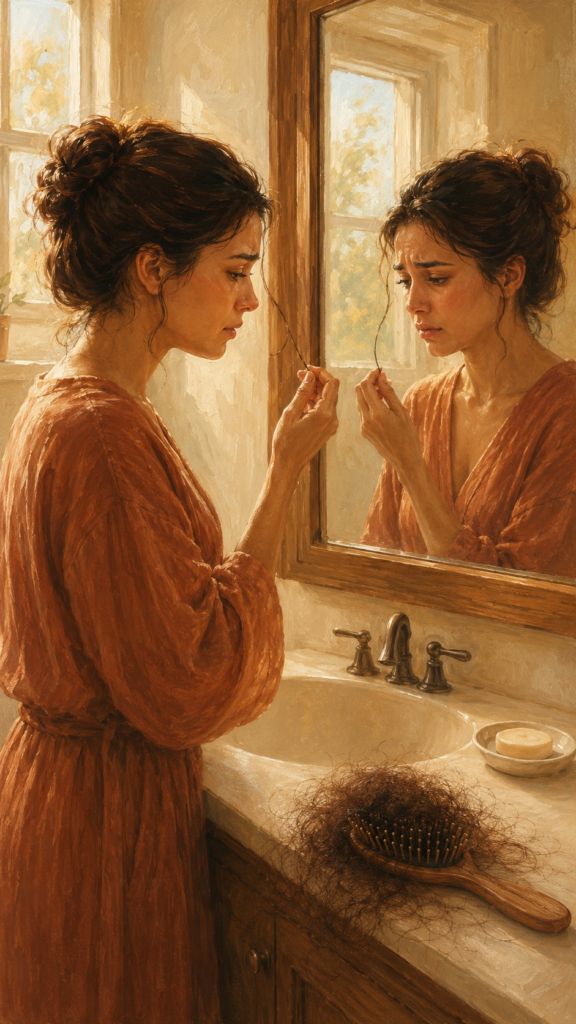
Somewhere around the three-to-four-month mark, a lot of new moms notice clumps of hair in the shower drain or on their pillow — this is postpartum hair fall, and it can feel alarming the first time it happens. If this is you right now, take a breath. Postpartum hair shedding is one of the most common, and most temporary, changes your body goes through after having a baby, and understanding the ‘why’ behind it can make it feel a lot less scary.
Why It Happens
During pregnancy, elevated hormone levels, especially estrogen, extend the growth phase of your hair, which is why so many moms feel like their hair was thicker and shinier than ever while pregnant. Normally, a portion of your hair is always in a resting or shedding phase, but pregnancy hormones essentially press pause on that shedding for months. After birth, hormone levels shift back toward baseline, and all those hairs that were ‘on pause’ start to shed at once — this sudden catch-up is exactly what causes postpartum hair fall to feel so dramatic in the mirror.
How Long It Typically Lasts
There isn’t a way to stop postpartum hair fall itself since it’s hormonal, but a few gentle habits can make the experience easier day to day. Using a wide-tooth comb on wet hair (when hair is most fragile), being gentle when brushing, and avoiding tight hairstyles that pull on the scalp, like tight ponytails or buns worn daily, can all reduce additional breakage on top of the natural hair fall. A nourishing scalp massage, even just while shampooing, can also feel soothing during a season when self-care often takes a back seat, and it may support circulation to the scalp.
Small Things That Can Help
There isn’t a way to stop postpartum hair fall itself since it’s hormonal, but a few gentle habits can make the experience easier day to day. Using a wide-tooth comb on wet hair (when hair is most fragile), being gentle when brushing, and avoiding tight hairstyles that pull on the scalp, like tight ponytails or buns worn daily, can all reduce additional breakage on top of the natural shedding. A nourishing scalp massage, even just while shampooing, can also feel soothing during a season when self-care often takes a back seat, and it may support circulation to the scalp.
Products and Habits That Made a Real Difference
Beyond the basics, a few specific swaps tend to make the biggest day-to-day difference during postpartum hair fall. A volumizing shampoo designed for thinning hair can help existing strands look fuller while regrowth catches up — look for ones that focus on scalp health rather than just marketing claims. Dry shampoo becomes a genuine ally here too, since it can help disguise thinning at the roots between washes. And if you’re someone who colors your hair, this is a season where many stylists recommend holding off on chemical treatments until shedding has slowed, since hair is more fragile and prone to breakage while it’s happening.
Nutrition and Hair Health
Since so much of your body’s resources go toward recovery and, if breastfeeding, milk production, it’s worth making sure you’re eating enough overall, particularly protein and iron-rich foods, rather than focusing specifically on ‘hair vitamins.’ A well-nourished body supports healthy hair growth as a byproduct, rather than needing a separate specific intervention in most cases.
Styling Tips for the In-Between Stage
The regrowth stage, with all those short flyaway hairs around the hairline, can be its own styling challenge. A silk or satin pillowcase can reduce friction and breakage overnight. Headbands, soft scarves, or simply embracing the flyaways with a light styling cream can make the transition period easier to live with, even if it’s not glamorous.
When to Loop In a Professional
If shedding feels unusually severe, doesn’t slow down after several months, or comes with other symptoms like extreme fatigue, feeling unusually cold, or noticeable changes in mood, it’s worth mentioning to your doctor. Postpartum hormone shifts can sometimes overlap with thyroid changes — Health Canada’s postpartum health guide touches on this too — and a simple check-in can offer peace of mind either way, rather than assuming it’s ‘just’ postpartum shedding.
It’s worth knowing that postpartum hair fall is genuinely one of the most common, well-documented postpartum changes there is — it happens to the large majority of new moms to some degree, even if not everyone talks about it openly. That doesn’t mean you should ignore anything that feels off, but it does mean you’re not overreacting by being caught off guard, and you’re also not alone if it’s happening to you.
And if you’re deep in the thick of postpartum recovery more broadly, our Postpartum Essentials guide covers what else tends to help in these first few months.
Postpartum hair fall is one of those changes that so many moms go through quietly, almost as if it’s something to hide. It isn’t. If you’re comfortable, mentioning it to other moms in your life, whether in person or in the comments below, can be a small but real way to normalize something that’s already common. Chances are, someone reading this is going through the exact same thing right now and just needs to know it’s okay.
Postpartum hair fall can feel like one more thing your body is asking you to adjust to, on top of everything else motherhood already demands. But it is temporary, it is common, and it says nothing about how well you’re caring for yourself. Give it time, be gentle with your hair and with yourself, and know that this particular chapter does close.
Frequently Asked Questions – Postpartum hairfall
Will my hair go back to how it was before pregnancy?
For most women, hair volume and thickness affected by postpartum hair fall do return to a pre-pregnancy baseline once the shedding phase resolves, typically by around 12 to 18 months postpartum.
Is it normal for shedding to come in waves?
Yes, some moms notice shedding tapers off and then has a second smaller wave, particularly if breastfeeding and hormones shift again around weaning.
Does breastfeeding make hair fall worse?
Not directly, hair shedding is tied to the hormone drop after birth rather than breastfeeding itself, though some moms notice a secondary shift around when breastfeeding hormones change, such as during weaning.